
The Pony Dad Diaries: Part 1 - The Acquisition
I guess it was inevitable really. My wife rode when she was a kid, my mother-in-law trained the mounted games team, my brother-in-law and his partner work with horses, and their kids both ride. Yet somehow, I never imagined us owning a pony.

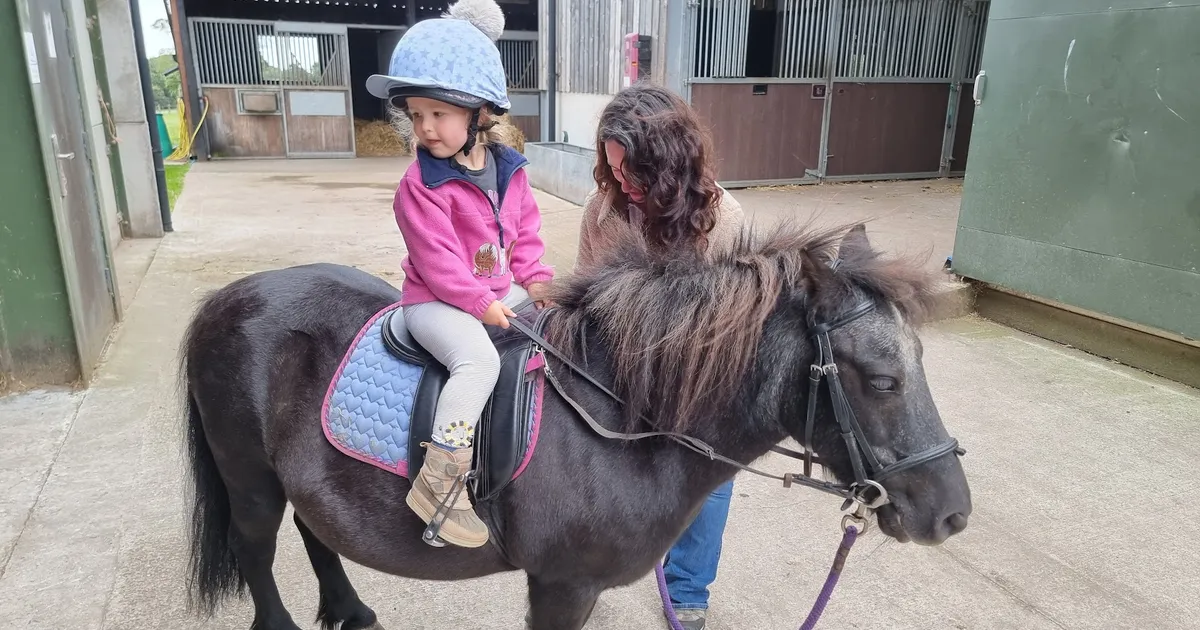
Test riding a Shetland pony
I had some exposure to horses growing up, and frankly I never liked them much. My sister spent her Saturdays helping out at a local riding stable in exchange for lessons, but whenever I was around horses it always felt like they had a shared dislike for me. They’d push me around, step on my toes and bite me, despite the inevitable protestations that this one would never do that. So it’s fair to say that the prospect of owning one of the creatures myself had never been high up on my bucket list.
Yet somehow, one sunny afternoon, we found ourselves going to see a little Shetland pony named Orville. Apparently, he’s super safe (that’s what they all say) and perfect for a little one to learn on. Of course, Rose loved him. I can’t imagine there’s many little girls that wouldn’t get excited at the prospect of their own pony, even if it isn’t much larger than a big dog. If that wasn’t enough then a test-ride to the local shop helped Rose to realise that pony riding was a great way to live out her princess fantasies. Everyone we passed stopped to point and wave at the cute little girl on the chubby little pony, cementing firmly in her mind that pony riding was AMAZING! Add in the fact that she got sweets at the shop and it was probably the best day of her life so far.
Meanwhile my brain’s desperately wondering what this innocuous creature is going to end up costing me in the long run. What does it eat? What about vet’s bills? A horse box? Where will it live? Are we all going to end up having to move into the stable once we’re forced to sell the house?!
So, things I’m starting to learn about horses. You can actually buy ponies pretty cheaply, but the price generally reflects how well-trained and reliable they are, at least when we’re talking about the kind of ponies you’d put a child on. You can pick one up for a few hundred pounds but expect your child to be bucked off/bitten/trodden on/all of the above if you’ve not got the time and experience to train it yourself. If you want one that’s likely to be trustworthy and suitable for a novice rider then we’re moving up into small used car territory in terms of pricing, hooray. I’d later discover that having ponies on free or cheap loan is also fairly common, but obviously no one told me that at the time…
As you’ve probably guessed, we ended up saying yes to Orville. Thankfully the current owners were happy to have him for a few more weeks while we got ourselves sorted and ensured he actually had a home to come to.
Now we needed somewhere to keep him. According to the Shetland Pony Club you need about an acre for a pony – larger ponies and horses may need a bit more. Some people may argue they can happily live on less, but unless your garden is field sized the chances are you’re going to need to find more space. This really leaves two options.

A newly acquired pony – and field
Option 1: Livery Stables. Livery stables are essentially purpose-built facilities for looking after horses and ponies. They’ll have stables, grazing land and often other amenities like a menage (a soft surfaced riding arena) or even indoor arenas for practicing. They typically offer either DIY livery – your pony lives there but you feed it, muck it out and do all the other things a horse needs – or full livery where they take care of everything and you just need to turn up to ride and enjoy your pony. Unsurprisingly this all comes at a cost, which can vary massively depending on the individual livery stable and the services and amenities it provides. That said if you can afford it and especially if time is limited it can be a great option. It also means you’ll be part of a community of other horsey minded people from day 1.
Option 2: Find some land and do it yourself. Now, decent land is expensive but finding a few acres to rent somewhere can be a lot cheaper than paying livery fees. There’s still a catch that you’ll probably have more upfront costs to set up some kind of shelter, electric fencing and suchlike (unless you get lucky enough to find a plot that already has this). You’ll be left to your own devices – which can be good or bad depending on your perspective – but you also have to do everything yourself. Who’s going to look after the pony if we go on holiday?
We were open to either option, but just to get a sense for what was out there we put a post on our local Facebook group to see if anyone happened to have a few acres they’d be willing to rent out for a ‘friendly and well-behaved’ (honest) Shetland pony. Surprisingly we had a number offers within a day or so of posting, so set up some meetings to go and have a look.
It wasn’t an easy decision as every location had pros and cons – some had stable buildings and water, some were with other ponies and had someone who could help out if we went away, some were walking distance while others were a short drive or on busier roads. After a great deal of umm-ing and aah-ing we decided to take the plunge and rent a field on the edge of our village that had come with the neighbouring house but never been used by its owners. At about 3 acres it offered plenty of space, was walking distance from home and close to my daughter’s nursery and – and this isn’t easy to find around here – didn’t appear to turn into a bog during the winter months.
The downside was that there were no amenities whatsoever. Shelter, water, and anything else we needed would all have to be brought in. Still, we had a field big enough for a pony, and a few days later with transportation provided by my sister-in-law, he arrived at his new home. So, we had a pony. Surely that’s the hard bit done, right?

A little girl and her pony